Leaders tell us inclusion matters. The question is, does it still matter when things get difficult? Or is it the first thing to go when you make budget cuts?
Pressure changes behaviour. Deadlines tighten. Budgets shrink. Complaints surface. Reputations feel fragile. And in those moments, values are often quietly renegotiated. Not in policy documents or leadership statements, but in decisions made quickly, behind closed doors, by a small group of people.
This month’s stories From The Edges reveal where inclusion is most at risk. When speaking up carries consequences. When 'business needs' override people. When leaders are tested not by what they say, but by what they protect when it would be easier not to.
From The Edges gives you our thoughts on what we have seen so far this year. And what a start to 2026, it's been a wild ride with so much happening around the world. We have taken a look and found the stories that caught our attention. If you lead people and want to take action on inclusion, these stories give you insights.
Plus, we share our news, and the actions you can take.
Stories From The Edges...
Google made an employee redundant after she reported sexual harassment
Victoria Woodall at Google reported a Manager who told clients stories about his swinger lifestyle and showed a nude photo of his wife. She was made redundant as a result. The investigation found that he had behaved inappropriately towards women, but it is the person who reported him who was made redundant. She was also demoted. The tech giant denies the claims.
The full story is worth reading to see what happened. This is not the first time we have seen women being treated in this way for reporting behaviour. Woodall gave details about several actions and described the culture as a 'boys club'.. This story shows the legal and reputational risks and where the power lies. How quickly culture evaporates under scrutiny, and how values on a slide deck compare to operational reality. For a company that talks about creating an inclusive culture for employees, there is clearly a lot of work to do
|
Calls for mandatory ethnicity pay gap reporting by end of the year
Did you know it was Ethnicity Pay Gap Day on January 8th? There was a lot of press coverage. This report caught our attention. Over half (55%) of UK workers are calling on the government to introduce mandatory ethnicity pay gap reporting within the next 12 months. Commissioned by People Like Us, the report reveals reveals 56% of ethnic minority workers have been paid less for similar work than a colleague from a different ethnic background.
Pay gap reporting does not fix everything, as we have seen with gender pay gap reporting. It does highlight the gaps, though and asks employers to hold themselves to account. Transparency around pay, salary bands and the inequities helps to drive change. If this comes into effect, that will drive employers to address issues ahead of mandatory reporting.
|
European social media platforms emerging after harm on US-owned platforms
The social media world has been rocked even further this month, with X (formerly Twitter) and the Grok AI app creating digital images that undress women and children. This has brought sharply into focus the fact that our social media platforms are all US platforms, with data held in the USA. This has led to European social media platforms emerging. Two that have caught our attention are monnet and W Social.
The way we interact with people online and the platforms we use affect how we experience the online world. Platforms that do not protect users cause harm to people and can lead to online bullying (known as trolling) with no protections in place for users. We will be keeping track of what happens during this year.
|
Mattel pushes for inclusion by launching Autistic Barbie
In more positive news, Mattell has launched their first Autistic Barbie. They have been creating different versions of Barbie to show children different types of people and bring a diverse range of characters to life. Created in collaboration with a US charity, this version of Barbie represents how people might experience autism.
Many supporters of this have said this is a positive move to challenge misconceptions and show people that there is representation. The Author Ellie Middleton, hopes that this will show young girls that it is OK to be autistic and be different.
|
Employer's disability confident scheme to be revamped
The employer's Disability Confident scheme is going to be revamped. This scheme encourages employers to recruit and retain disabled people and those with health conditions. It has 19,000 employers signed up. The review will address concerns and constraints in the scheme. The aim is to address the fact that the scheme is not delivering effectively in practice, and there is a lack of evidence on the outcomes.
Schemes like this can be brilliant and transformative if they deliver on impact and results. The revamp to the scheme will address issues such as how long employers can remain at the entry level. There will be tailored support, which will make the scheme more meaningful. There are calls to go even further with the scheme to make it even more impactful.
|
Here’s the challenge for people leaders reading this:
Think about the last moment your organisation was under real pressure.
A complaint. A restructure. A reputational risk. A decision that needed to be made fast.
Ask yourself:
- Who was protected?
- Who carried the cost?
- Whose voice mattered most in that moment?
- And what did that decision teach people about what inclusion really means here?
Inclusion is not proven in calm conditions. It is shaped under pressure.
If your culture is only inclusive when it is convenient, it will not survive the moments that matter most.
And now from us...
Mo was on BBC Radio Sussex
Mo was a lunch break guest on BBC Radio Sussex this month. She talked about her career, from the University Of Sussex, through a career in tech to now. She was invited onto the show to talk about being named one of the top 100 female entrepreneurs in 2026 by Small Business Britain.
Who Gets To Play? Read our new report
We collaborated with the University of Sussex for an exciting new report. A group of students looked at gender diversity in technology and gaming companies and created this new report full of insights.
Starting your journey to allyship?
It can be difficult to know where to start. You read the news stories, you know you need to do something, but where do you start? One of the ways to start your journey to allyship is by doing some learning. We have two options for you to get you started.
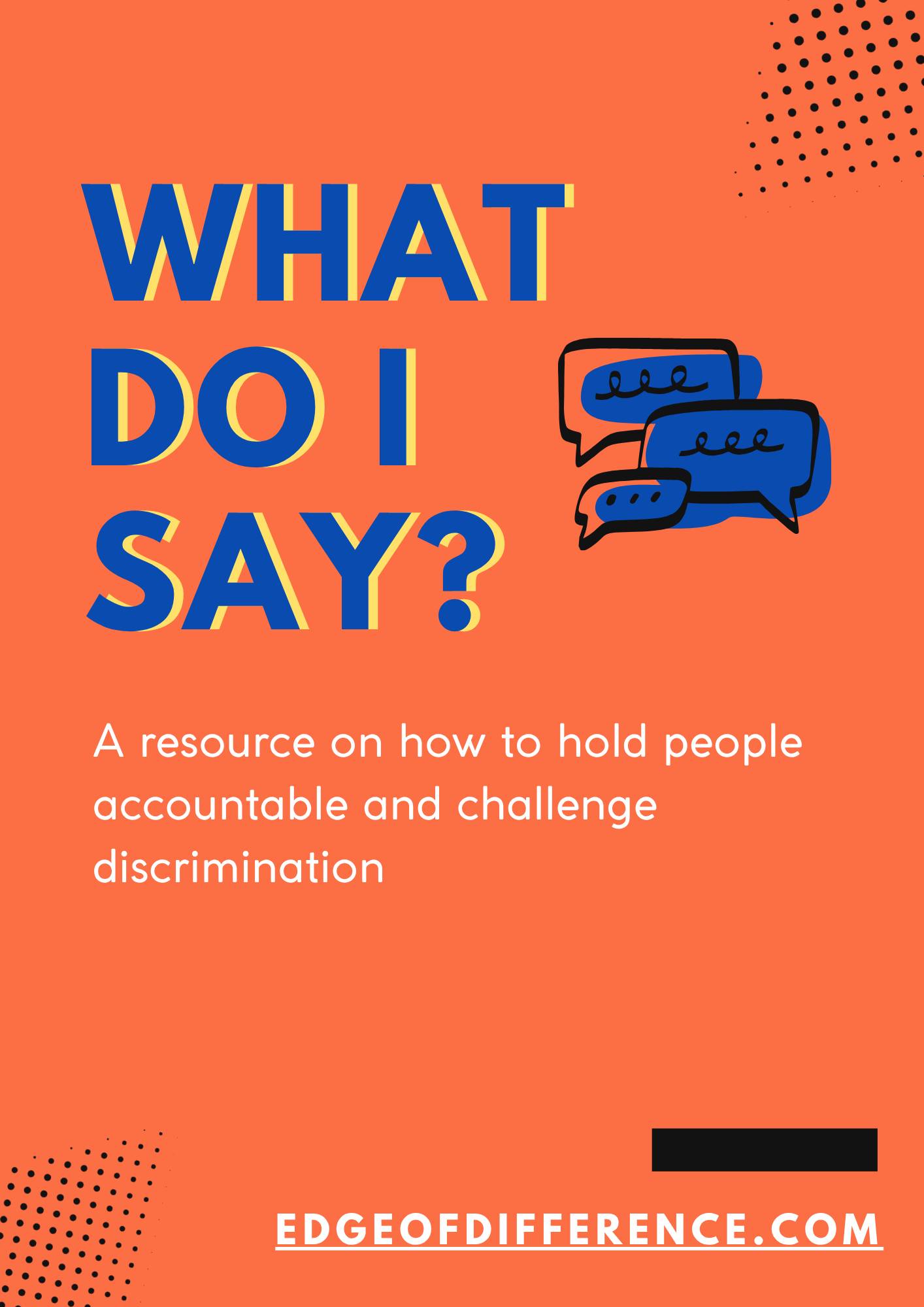
What Do I Say? Resource
Learning about allyship is one thing, knowing what things to say is another. This guide gives you information on how to hold people accountable and challenge discrimination
 |
£5.00
Allyship - What Do I Say? Resource
A resource on how to hold people accountable and challenge discrimination.
This resource is linked to our Allyship To... Read more |
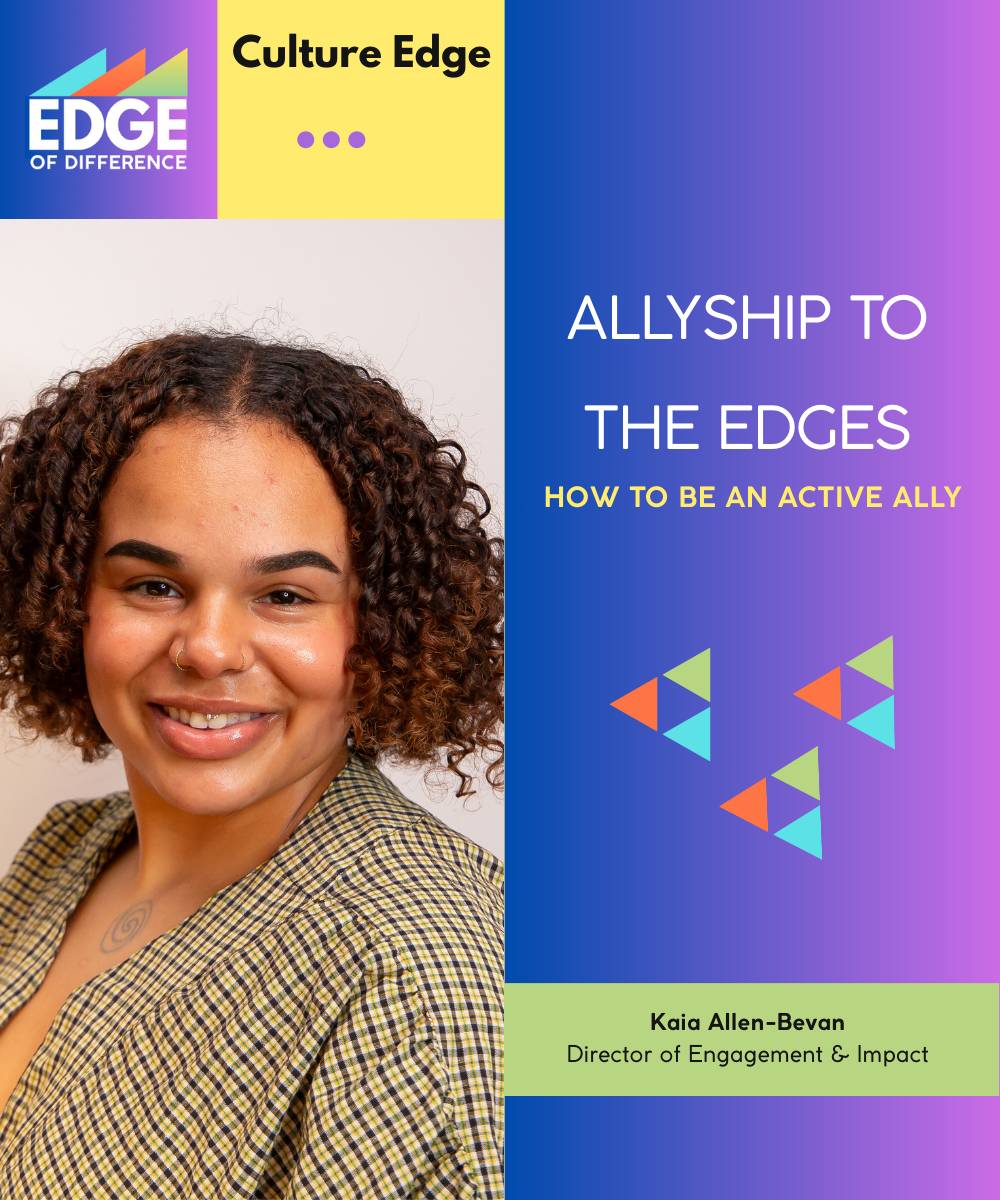
Allyship bundle - training and guide
The Allyship Bundle gives you an online, on-demand version of our Allyship To The Edges training. So you can learn in your own time. If you buy this, the What Do I Say? Guide comes free with it. So you can get working on the actions you can take.
 |
£149.99
Allyship To The Edges - On Demand Training
An on-demand training course to watch in your own time on how to be an effective ally.
With a guide to accompany the... Read more |
Inclusion Power-Up Programme
What do our typical training programmes look like? A programme we run with companies is our Inclusion Power-Up. This programme helps your whole team learn about how to communicate inclusively and with impact. Everyone who interacts with clients needs to think about their communication.
The programme includes:
- Analysis of your diversity, equity and inclusion data
- Lead The Difference - Inclusive leadership training for leaders
- Edge Awareness - biases training for everyone
- Allyship and language training for everyone
We can also help you set up an employee group as part of this programme. Find out more here:

